Who Is Responsible for Water Pipes
The water meter settles the question of who is responsible for water pipes. In Kelvin Grove, the utility is Urban Utilities, and its rule is short. The supply pipe running from its network up to your meter is generally its own, and everything past the meter belongs to you, the property owner.
If we're late, $100 comes off your bill

- Licensed and InsuredEvery job done by a licensed plumber. QBCC No: 15024607
- Fixed Quote FirstFlat-rate pricing, agreed before any work starts
- Lifetime Labour WarrantyBacked by our Fix-It-or-It's-Free guarantee (T&Cs apply)
- $0 Call-Out FeesNo extra charge for nights, weekends or public holidays
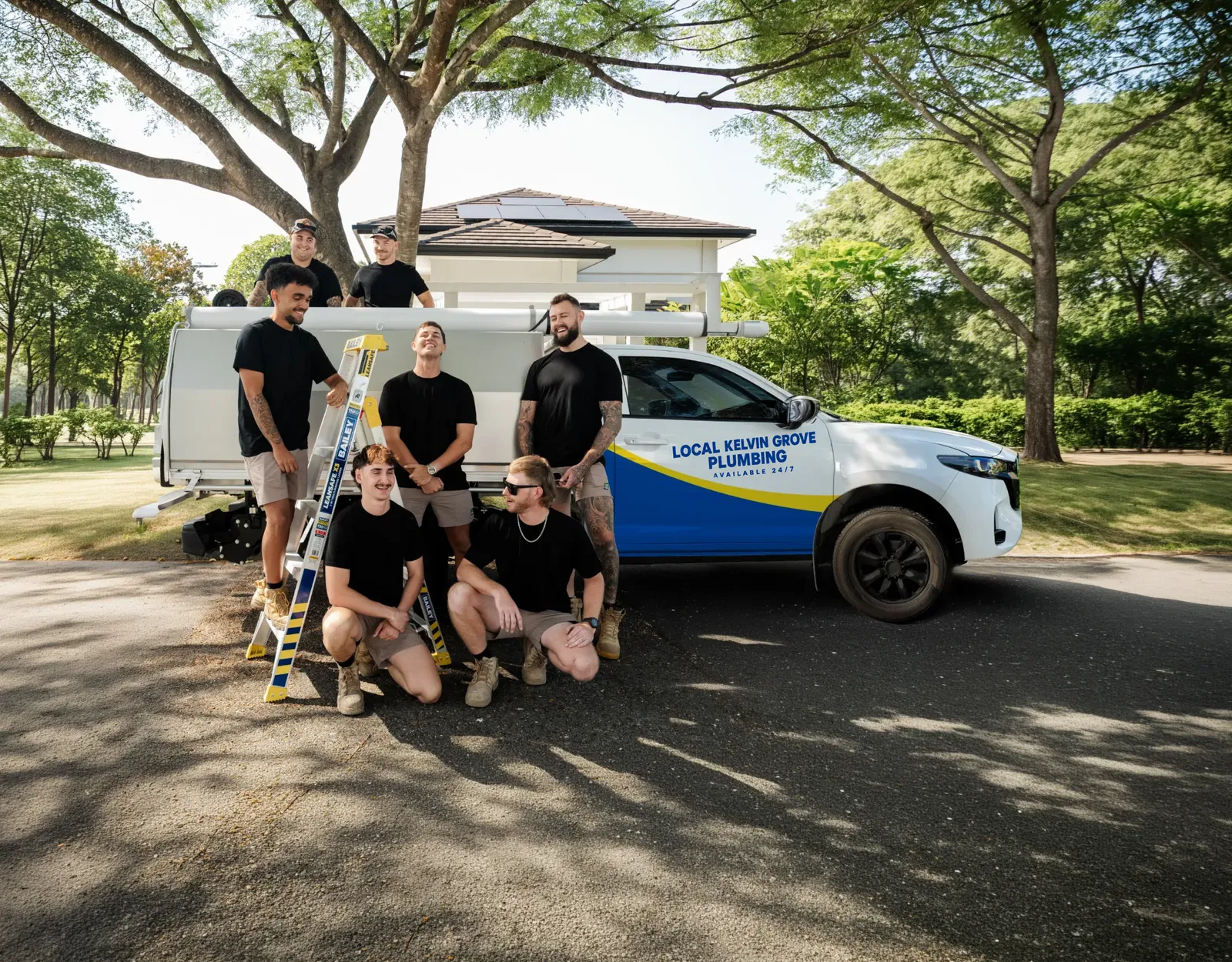
Owners and tenants both ask a licensed plumber where that line sits, and the answer follows the meter, not the building. At the last census, apartments outnumbered the 989 separate houses here nearly two to one, so one street can hold an old cottage on galvanised supply pipe and a tower block with a meter room. The split stays the same for both.

How Your Water Utility Draws the Line
Urban Utilities owns the supply pipe from its network to your meter. Your pipes begin at the meter and run into the property.
That is the whole rule in one sentence. The public water main in the street belongs to the utility. So does the meter, and so does the short run feeding it.
The utility's own guideline frames the owner's stretch as all pipework past the meter, out to the plumbing fixtures such as a tap. If a leak springs anywhere in that stretch, the owner investigates and repairs it.
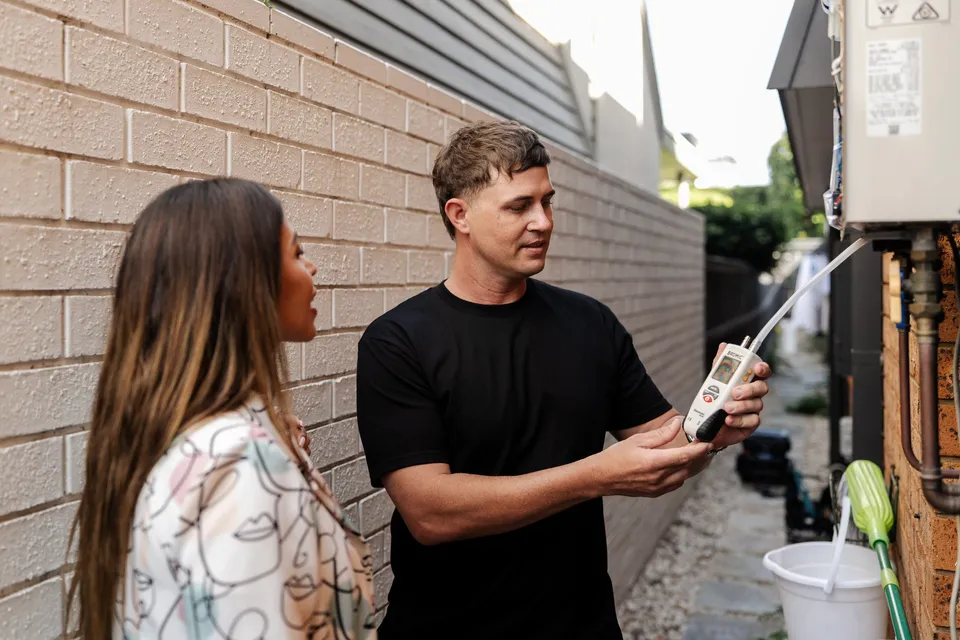
Which Pipe Belongs to Whom Along the Line
Walking the supply from the road to your kitchen tap, four stretches each have a different owner:
The public water main
Urban Utilities owns and maintains it.
The supply pipe upstream of the meter
generally the utility's as well, because it sits before the meter.
The meter itself
the utility owns every meter it installs and signs off under its own guideline, and it services and replaces them over time.
The pipes from the meter to the fixtures
yours, from the first fitting after the meter through to the last tap.
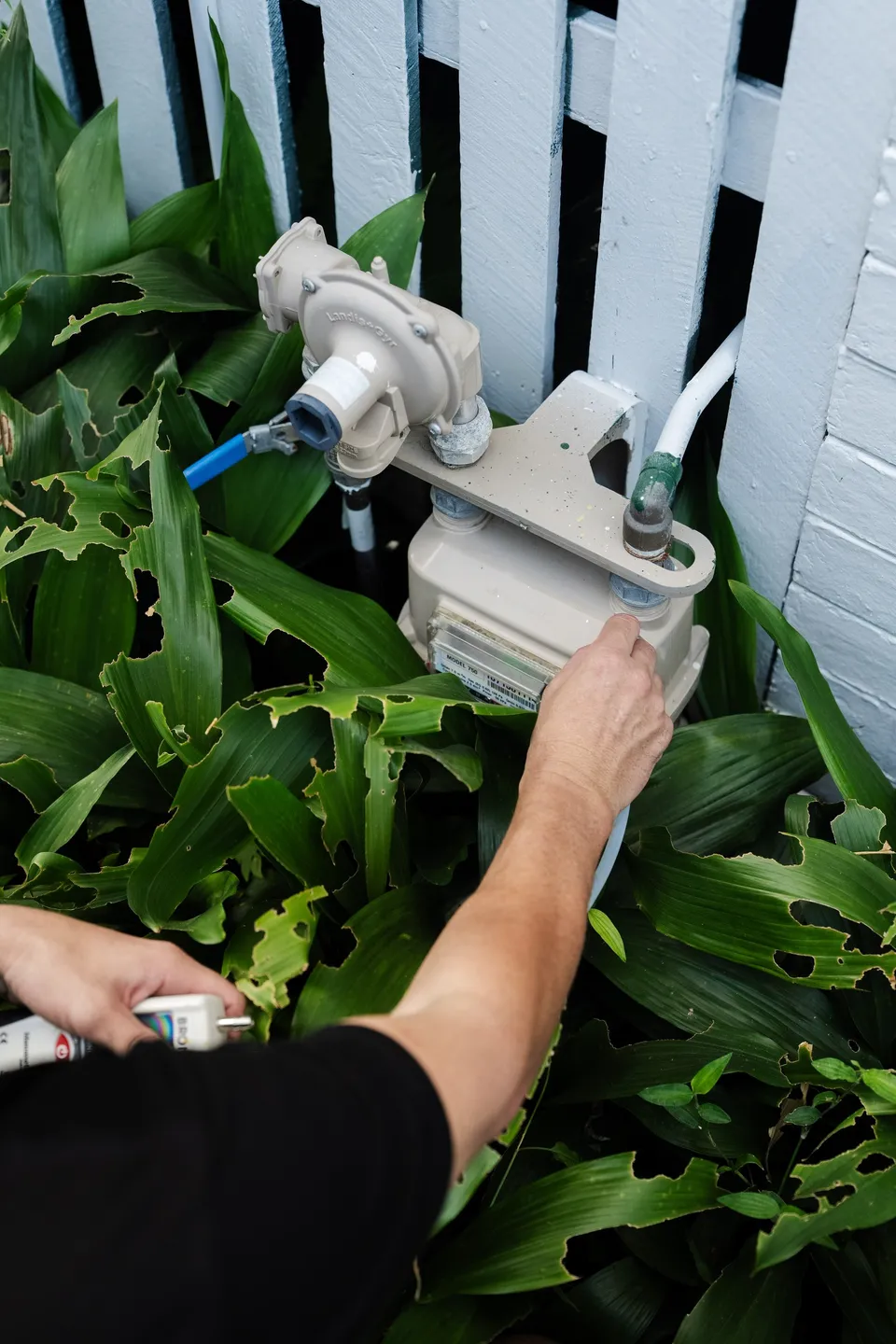
Most houses here carry a 20 mm or 25 mm meter in a shallow box below ground, sitting level with the verge or footpath at the front boundary. You will usually spot it out the front, near the road.
One Brisbane variation shifts the line. Where a large meter, 32 mm or bigger, cannot be placed within 2 metres of the boundary or kept freely accessible, Urban Utilities may approve putting it inside the building.
The owner then looks after the pipework from the utility's service up to that meter, and any leak on that stretch is the owner's to have repaired promptly. The meter stays the utility's property.
That exception belongs to big connections, not an ordinary house. A cottage near the old tram streets has a small meter in the verge, and its pipe begins at the meter.

Who Pays When a Leak Goes Unnoticed
Three things decide who carries a hidden leak's loss:
The owner holds primary responsibility
for leaks past the meter and for the water the meter registers.
A concealed leak is water escaping on your side of the line that stays out of sight
underground, in concrete or under a building, with no visible dampness or soaking.
Relief on the water bill comes only through the utility's concealed leak allowance
, and it does not cover the plumbing repair costs.
Every litre the meter registers goes on the owner's account, leaks included. That is the hard part of a leak under a driveway or inside a wall: nobody sees it, and the meter keeps counting. The leak detection page spells out how a plumber traces a hidden leak and what the allowance rules cover.
The old supply lines make this a live issue here. Galvanised pipe in unrenovated cottages corrodes from the inside, and what looks like a stain on bedroom plaster can be a pinhole in the cavity, running day and night on the owner's stretch.
Keeping Your Side of the Line in Order
Your job as the owner runs on three fronts:
Investigate and repair
any leak or blockage found in the pipes past the meter and into your land.
Keep the meter clear
so it can be read, serviced and swapped. No concrete over it, no plants or raised garden beds hiding it, and nothing that needs a ladder or a tight squeeze to reach.
Ask before you build
Putting in, altering or taking out a meter and its pipework always needs the utility's Water Approval first.
Fixing a damaged pipe is regulated minor work: a licensee does it, with no permit needed and no Form 4 filed. A licensed plumber handles the repair and, if the fault sits in old steel or earthenware, can advise whether a section or the whole run needs replacing.
One more Brisbane rule is worth knowing. Sewer and water lines belong to Urban Utilities, and the council leaves enquiries about building over or near them to the utility. You apply to Urban Utilities, not the council.
When to Call a Plumber
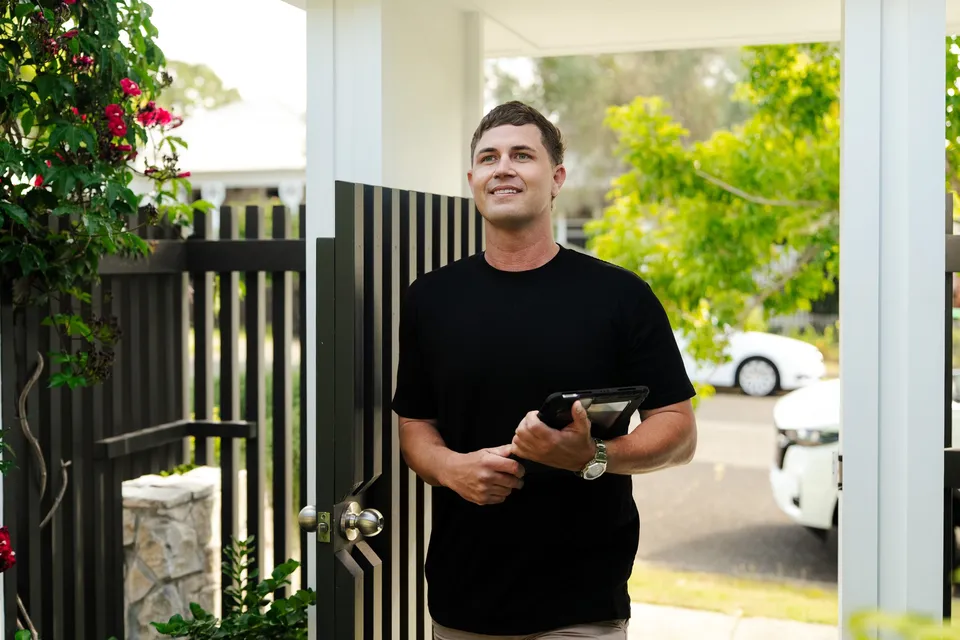
Call a plumber when water appears where it should not, or when the meter keeps turning with every tap in the house off. Damp patches, weak flow at one fixture, or a bill that climbs without a change in habits all point at the owner's stretch.
A plumber traces the fault, names the stretch of pipe responsible and gives you a fixed quote before any work starts. If the leak turns out to sit before the meter, tell the utility and it arranges the repair.
Questions Kelvin Grove Owners Ask
Call (07) 3523 7121Where does my responsibility for the water pipe start?
At the water meter. Urban Utilities owns the meter and generally the supply line running to it from its network, so everything downstream of the meter to your taps and fixtures is yours to maintain. One exception exists: where the utility has approved a large meter within the building, the owner's pipe begins at the street boundary.
Who repairs a leak on the street side of my meter?
Urban Utilities does. The supply line from its network to the meter is generally the utility's, and the meter belongs to it as well. Tell the utility about the leak and it arranges the repair.
Is a leak under my driveway my responsibility?
Yes, when it sits past the meter on your land. Every pipe from the meter into the property is the owner's, including runs buried under driveways, concrete or gardens. A concealed leak counts too, and a plumber can trace it without digging up the whole drive.
Can I build over a water pipe on my property?
Not without approval first. In Brisbane, those pipes are Urban Utilities assets, and the council passes such enquiries to the utility. You apply to Urban Utilities before any work begins.

Talk to Us About Your Side of the LineWe'll call you back.
Ring (07) 3523 7121 and tell us what's wrong. You get $0 call-out fees, a fixed quote before any work starts and same-day where we can, 7 days a week.
To claim your $0 call-out fee, call (07) 3523 7121 today.